
Business without frontiers
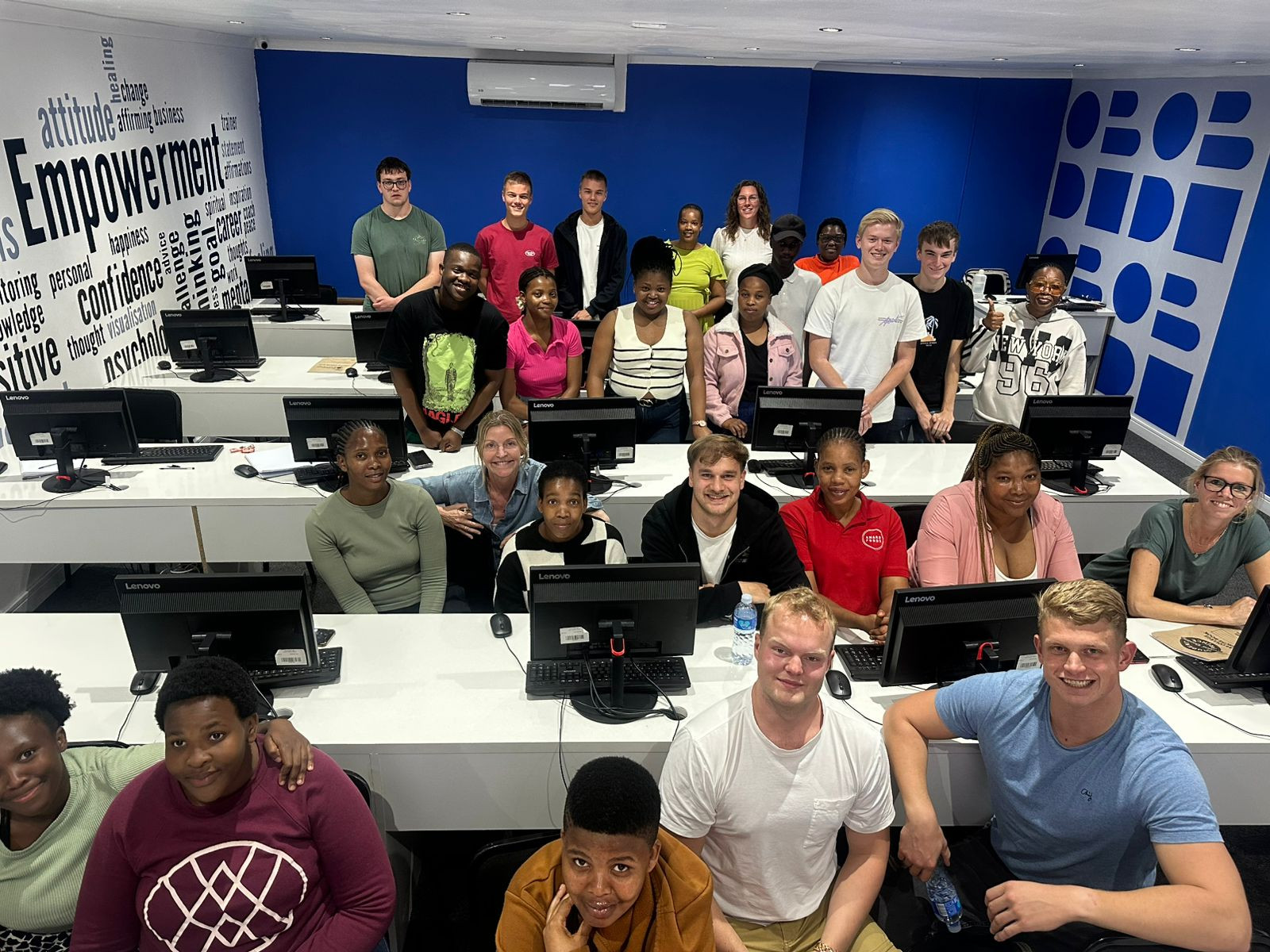
What happens to your old trainers when you throw them away? And who is responsible for the growing mountains of shoe waste worldwide? In the international Global Business Development minor at Inholland University of Applied Sciences, you do not avoid these questions. You take them on. Together with international classmates and real companies, you work on sustainable solutions that go beyond theory.
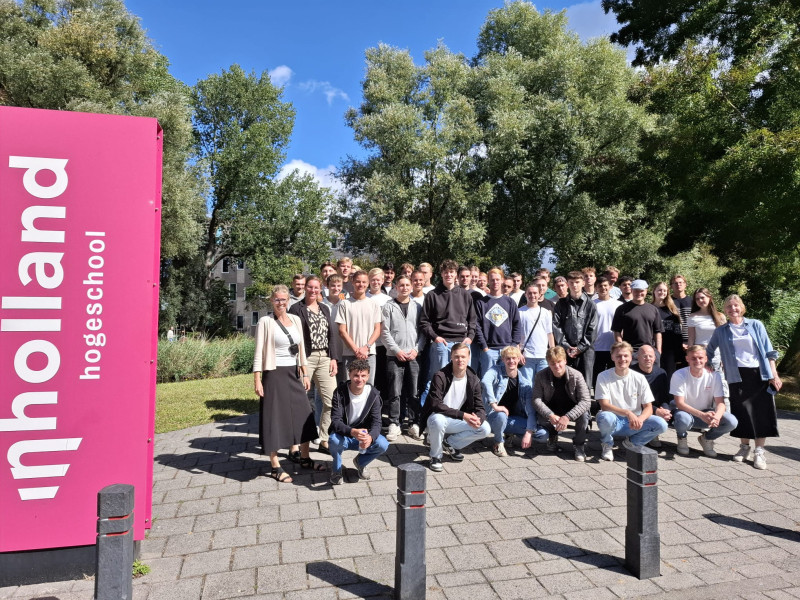
This minor is open to third and fourth-year students from Inholland and other universities. Last semester, 42 students took part, including eight exchange students from countries such as Ukraine, Turkey, Germany and the United States. This mix is no coincidence, says coordinator Astrid de Jong. “You do not only learn about international business here. You experience what it means to work with different cultures and perspectives.”
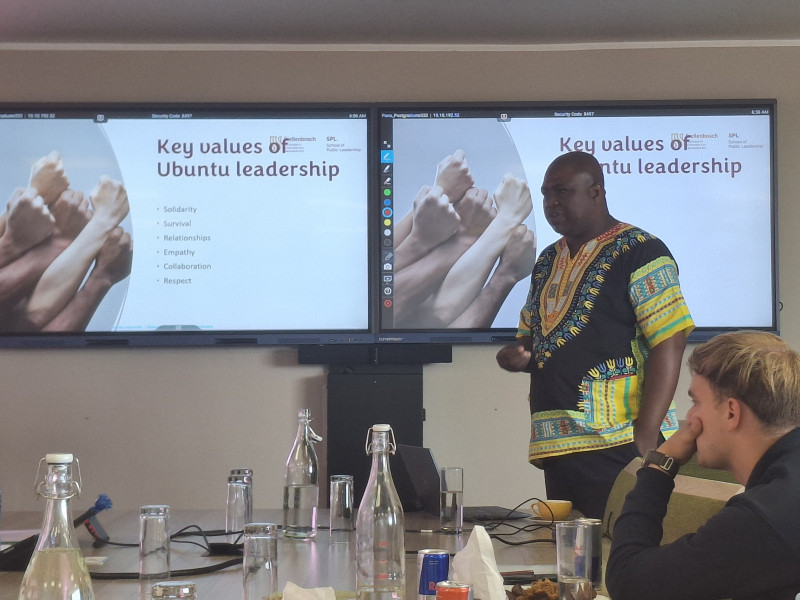
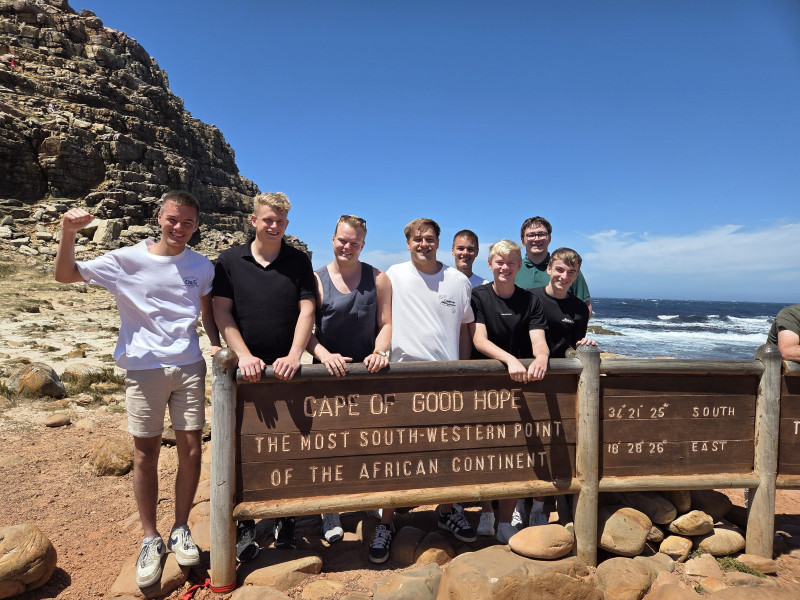
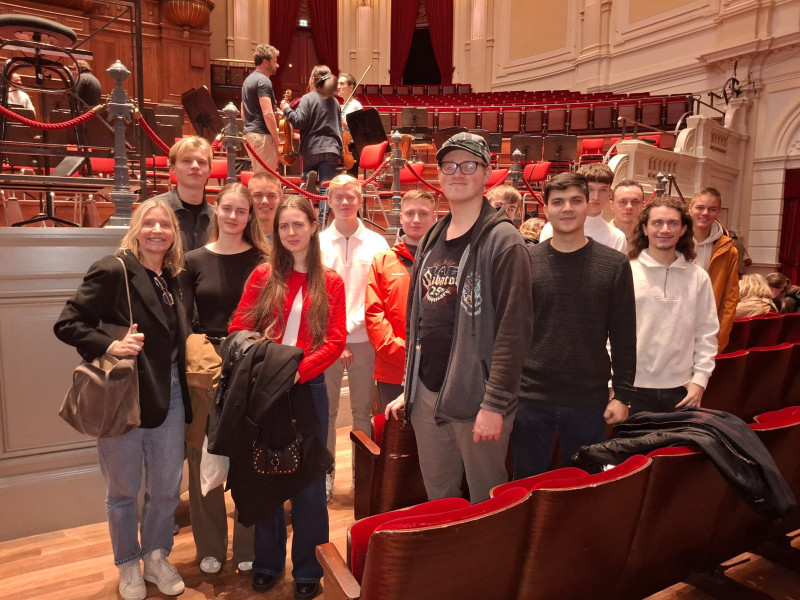
That international focus runs throughout the programme. You attend lectures, take part in the International Lecturer Week with guest lecturers from the United States, Canada and across Europe, and go on study trips to South Africa and Slovenia. Erasmus funding helps make these trips accessible to everyone. You also work in teams on real assignments for four organisations: FastFeetGrinded, the Energy & Health Campus in Petten, AI agency NLockd and brewery Sancti Adalberti. This way, you connect global challenges directly to entrepreneurship and social impact.
The generation that takes action
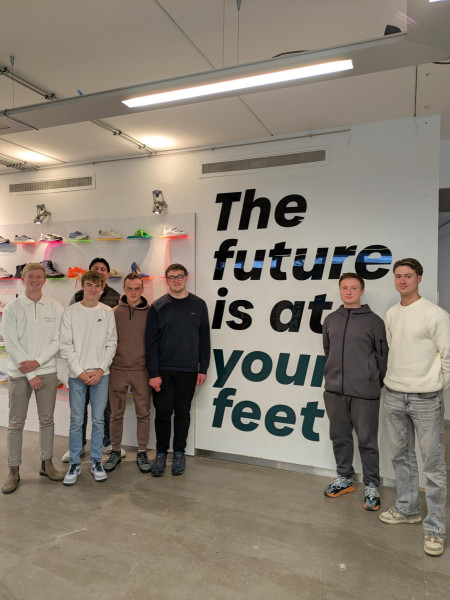
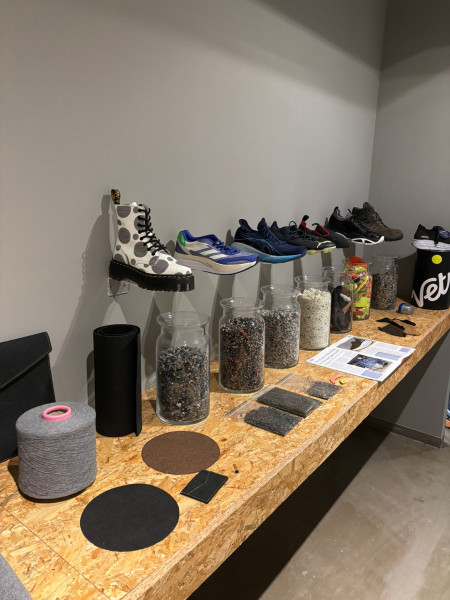
FastFeetGrinded challenged you with a clear task: develop a business case for shoe recycling. This company, based in Heerhugowaard, processes four to five tonnes of discarded shoes every day. It is unique worldwide in fully separating and reusing all materials.
This work is urgently needed. Every year, 25 billion pairs of shoes are produced, yet only one to two per cent are recycled. The rest ends up in landfill or is burned, often in Africa and Asia.
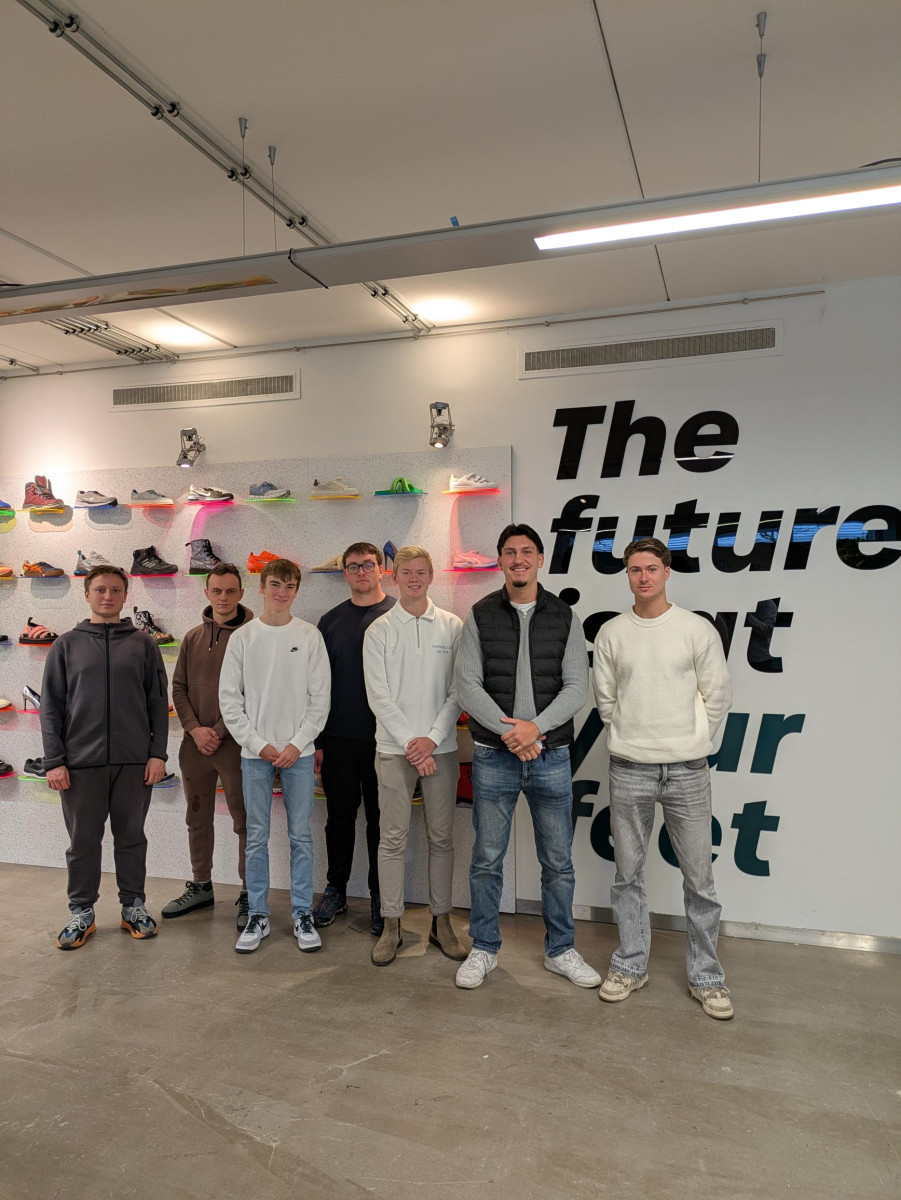
“Sustainability alone is not enough,” says International Sales Manager Peter Grusz. “We also need to deal with the waste that already exists. The technology is there. The real challenge lies in behaviour and scale. Without effective collection, circularity remains a promise.” For FastFeetGrinded, this collaboration is clearly strategic. “This is not a one-off education project, but a way to test and accelerate new European circular models together with the next generation.”
A European business model
Two student groups explored a key question: how do you encourage young people to hand in their old shoes instead of throwing them away? Through an international survey, they collected 280 responses. The results were confronting: 70 per cent see recycling as important, but only 25 per cent act on it.
“The main issue is convenience,” explains exchange student Taras Dombrovskyi from West Ukrainian National University. “People are willing to recycle, but they do not want to make extra effort.” The solution? Collection points in places young people already visit, such as supermarkets and gyms, combined with smart logistics. FastFeetGrinded is now exploring how these ideas can grow into a viable European business model.
Making circularity visible
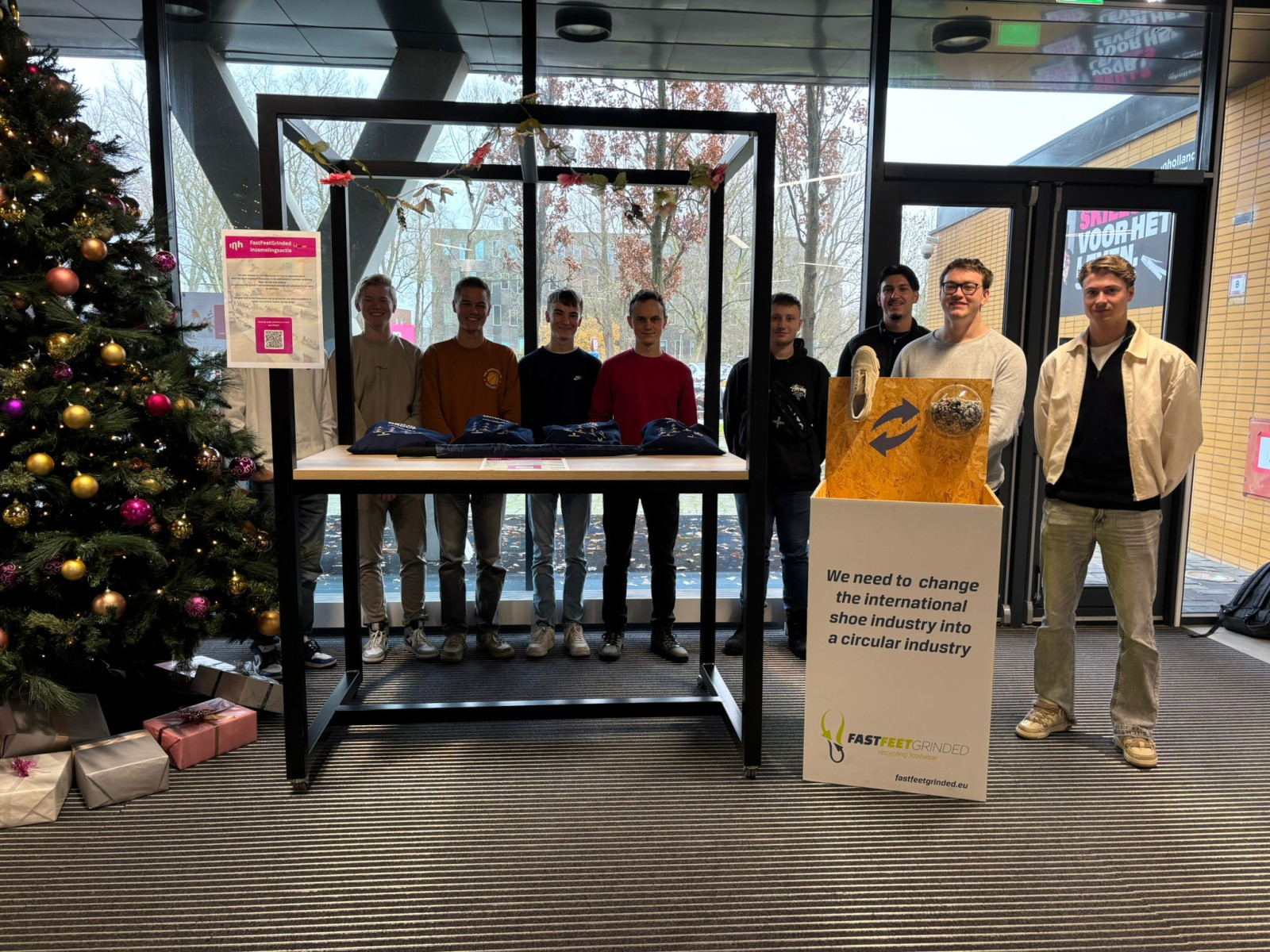
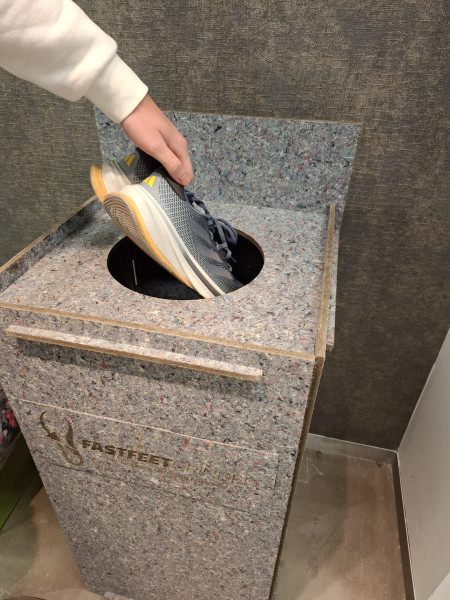
The project went beyond theory. Students also organised a collection campaign and awareness drive on campus at Inholland Alkmaar. With a FastFeetGrinded container, social media promotion and support from the communications team, they made circularity visible right at the entrance of the university.
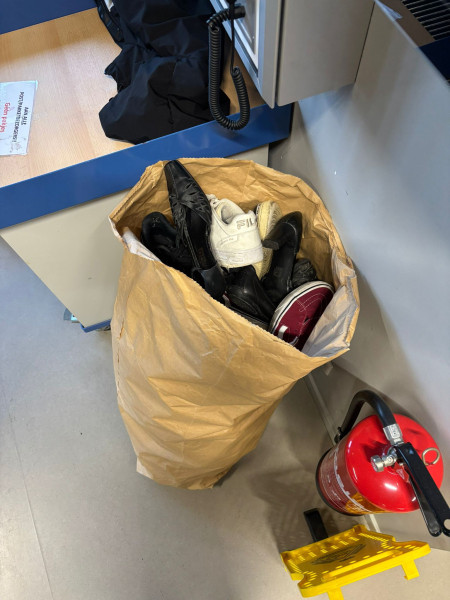
“This was probably the best part of the semester,” says Taras. “Not just researching, but actually doing something.” In three months, you collected around 50 kilos of shoes. Just as important, students and staff started conversations about recycling and responsibility.
An eye-opener
For Business Studies student Aaron van Heumen, the international character was the main reason to join. “You speak English with international students and companies and learn a lot.” He worked with students from the University of Zaragoza. “Their planning sometimes worked differently, but that actually helped us bring new ideas into our project. And what stood out is that shoe recycling is much less common in Spain than in the Netherlands.”
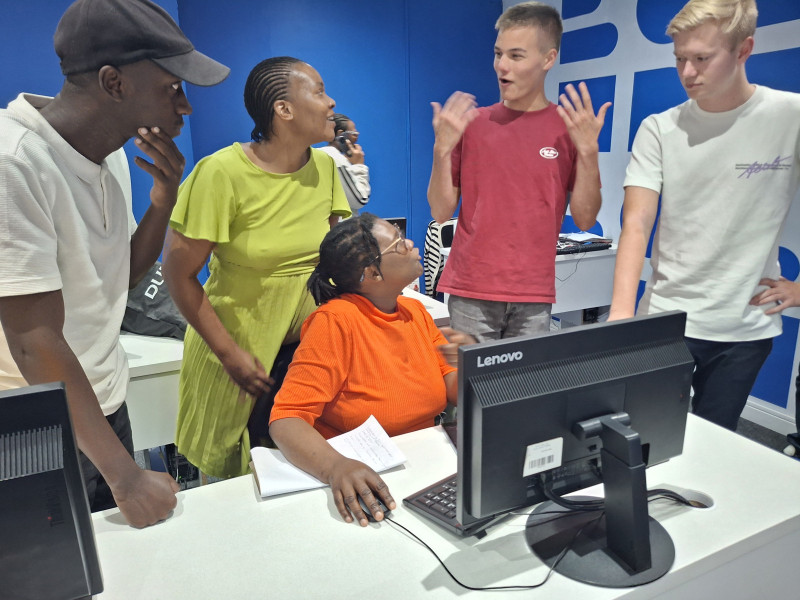
The highlight was the study trip to South Africa. Before the trip, students researched South African wine brands and presented their advice on location. They also visited social initiatives, sustainable businesses and attended masterclasses. “You might think everyone can work with computers, but some people do not even have access to them. The differences are huge. That was a real eye-opener.” The week gave him a broader view on inequality, sustainability and international collaboration. “This is one of the best experiences I have had at Inholland.”
Global citizenship in action
According to Astrid, this is exactly what the minor is about. “You experience that your choices matter, that global challenges have local impact and that collaboration is essential to create change.” And yes, she adds, it is also simply enriching, both professionally and personally.
Taras felt the same. “Through the study trips, meeting a wide range of guest speakers and working with international students, I discovered how much we actually share. We have the same values. We are all citizens of this world.”