

Internationalisation as a bridge builder: BIP Regenerative Cultural Practices
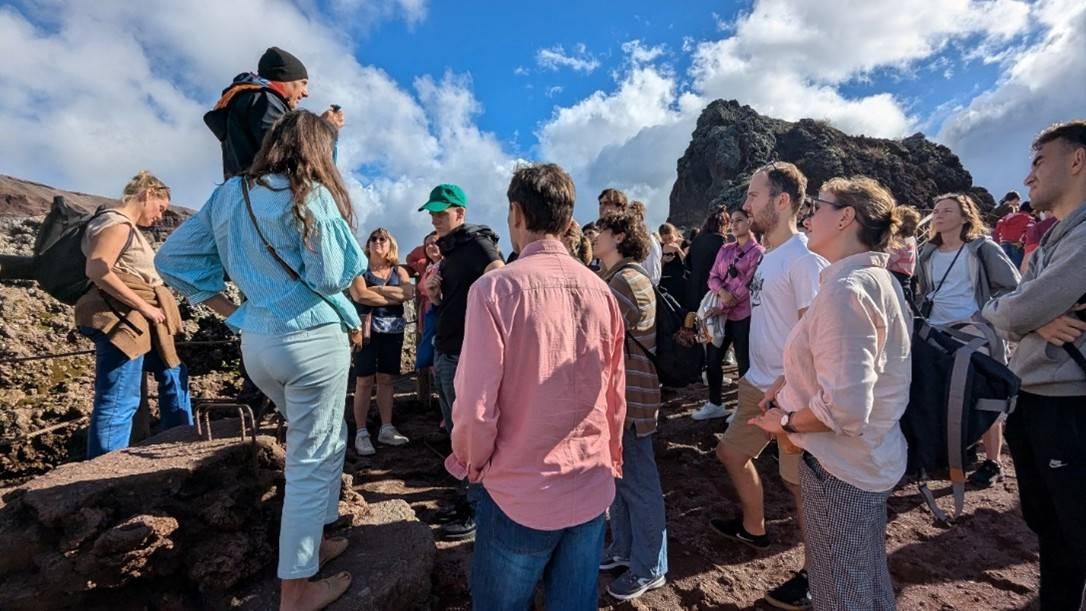
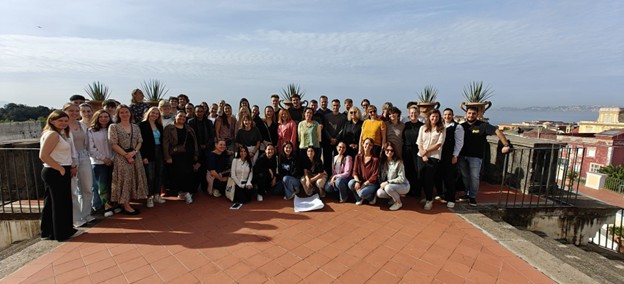
Societal challenges require interdisciplinary collaboration and this was the aim of the Erasmus plus Blended Intensive programme, Regenerative Cultural Practices that Inholland university, Creative Business, organized in Ercolano, Southern Italy this autumn. Approximately 60 Students of tourism, social work, landscape architecture, business communication and even biology - from four universities across Europe, came together to work on sustainable tourism in Ercolano, a poor suburb of Naples.
In post-industrial settings such as the metropole area Naples, tourism can offer a pathway to development, that is to say; if the pitfalls of unsustainable urban governance can be avoided (Horgan and Koens, 2024). Stimulating dialogue between students and local communities encourages the identification of solutions that meet the unique needs of the area, exposing students to understand how regenerative cultural heritage management can promote alternative pathways for development (Gerritsma and Horgan, 2024).
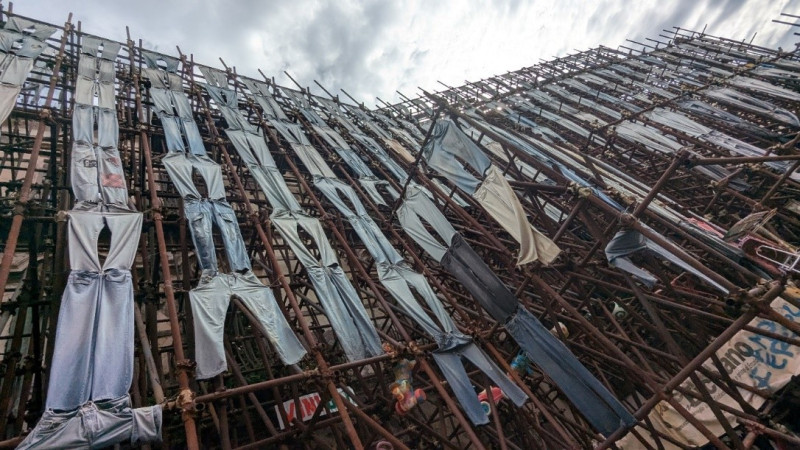
Ercolano has a lot to offer in terms of natural and cultural heritage, only the local community doesn’t always profit from this and (hence) they don’t feel ownership. The management of this heritage is in the hands of a small group of people and they struggle to identify ways to give the heritage “back to the community”. Seeking new perspectives, students were invited to work on a set of concepts that can improve quality of life and place, working closely with local civil society organisations.
The collaboration between various disciplines, various academic levels and above all; different cultures was quite the challenge for the students. They really needed time to get to know each-other and understand each-other, while they were under pressure to develop a prototype within a few days.
But eventually this discomfort brought personal growth and the embracement of change. If we want to educate our students to be changemakers, it means we have to keep training them in these situations.
The multicultural backgrounds helped us to see the project from multiple angles and this experience helped us to balance big ideas with practical steps and how combining different perspectives can lead to a strong final result.

Eventually the students got to present their designs to a group of local stakeholders and experts in the field of cultural heritage and they were surprised by the creativity and freshness of the ideas of the students.
It was a truly intensive Experience, with almost no time to sit down and relax, but we came out more resilient and richer.
This project eventually allowed a deeper understanding of the meaning of resilience, because it didn’t just focus on resilience of the local community, but also created resilience in the team of students and teachers.
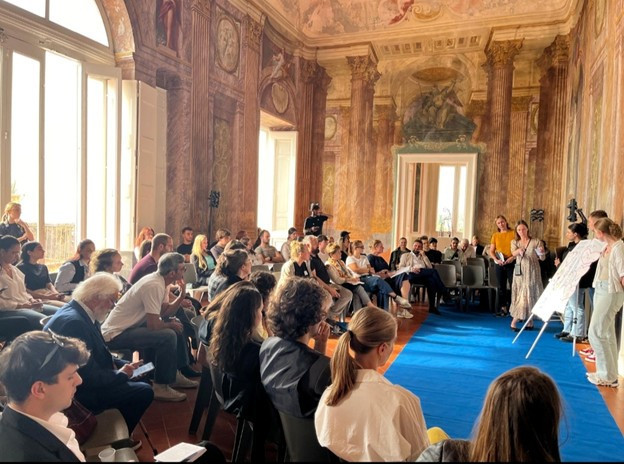
This BIP was the highlight of the collaboration of a few months of collaboration between Inholland University, the university of Naples, Federico II, Munster Technological university and Vilnius Technical University, together with the local partner; the social enterprise “Variabile K”. What emerged is an intensive, interdisciplinary programme combining online masterclasses with practical experience in the field.
The Blended Intensive Programme (BIP) model allows for short, intensive programmes leveraging innovative ways of learning and teaching, in hybrid settings. Enabling new and more flexible mobility formats, BIPs can open up student mobility to all backgrounds, study fields and cycles. Besides, it is a great way to stimulate collaboration, between the domains from Inholland. Teachers from TOI and GSW joined the colleagues from CRB to develop, teach and evaluate this project. The next edition will be hosted by the domain of TOI and it will be called “Regenerative placemaking, the power of Nature” focussing on renewable energy eco-systems.
Gerritsma, R., & Horgan, D. (2024). De Urban Leisure and Tourism Labs als broedplaatsen voor interventies op het gebied van duurzaam toerisme: het delen van inzichten vanuit onderwijskundig onderzoeksperspectief op regeneratieve placemaking in Amsterdam en Rotterdam. Toeristische interventies, 129-140.
Koens, K., Stompff, G., Vervloed, J., Gerritsma, R., & Horgan, D. (2024). Hoe diep is uw lab? Inzicht in de mogelijkheden en beperkingen van living labs in het toerisme. Tijdschrift voor Destination Marketing & Management, 32, 100893.