
The Future of Flight: Innovation and Collaboration Central at SWAPEC 2024
Sipke Wynia Symposium on Sustainable Aviation a Resounding Success
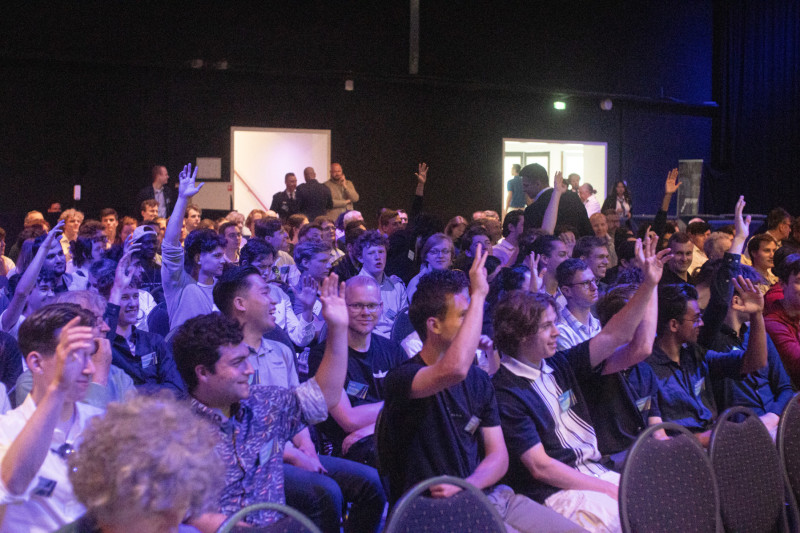
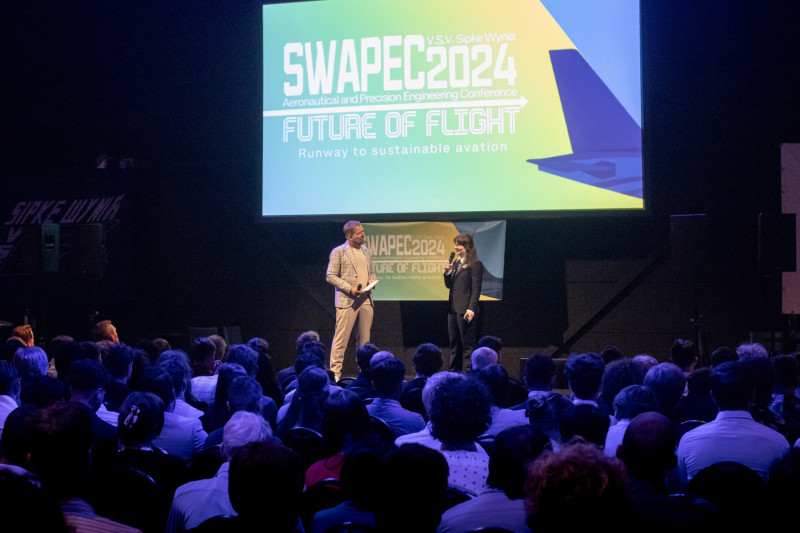
The Dutch government aims to reduce all CO2 emissions to zero by 2070. This seems an impossible challenge for future aviation engineers. How can we make aviation more sustainable? This question was central during ‘SWAPEC 2024: Future of Flight - A Runway to Sustainable Aviation,’ a symposium held at Rotterdam The Hague Airport organized by the student association V.S.V. Sipke Wynia of the Aeronautical & Precision Engineering program at Inholland University of Applied Sciences Delft. Interesting speakers and companies presented their innovations and discussed the challenges facing the aviation industry. The event offered students plenty of opportunities to meet industry professionals and explore their roles as future engineers.
SWAPEC stands for ‘Sipke Wynia Aeronautical & Precision Engineering Conference’ and was organized this year for the 42nd time. Why focus on sustainable aviation? “Because it is important to prepare young professionals for the drastic changes ahead,” says Kiki de Brouwer, chair of V.S.V. Sipke Wynia. The symposium attracted experts and representatives from both large companies and smaller startups, as well as students, researchers, and lecturers from the TU Delft and Inholland University of Applied Sciences. There was also an innovation market with demonstrations from NLR, Saluqi Motors, NRG2Fly, AeroDelft, Vaeridion, and Inholland. The day was chaired by Harm Edens, known from ‘BNR Duurzaam’ (podcast) and ‘Dit was het nieuws’ (TV).
“Extremely interesting to hear about the technological developments taking place and which companies are working on innovations to meet the ambitious goals for sustainable aviation,” says Tjalle Hanzens, a fourth-year Aeronautical Engineering student at Inholland Delft. “It is up to our generation to achieve the climate goals; it’s good to know what skills are expected of us.”
Dutch Ambitions
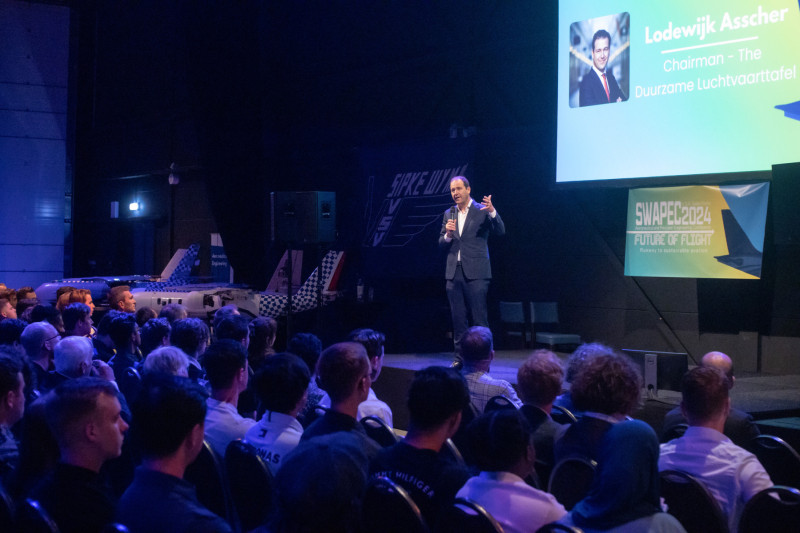
Lodewijk Asscher, chairman of the Sustainable Aviation Table, kicked off the event. He emphasized the importance of (global) cooperation and the need for fair prices and kerosene taxes to stimulate innovation. "International travel is essential for building intercultural relationships and avoiding polarization. Instead of blaming individual travelers for pollution, we need to create a viable market and economy for sustainable flying, possibly supported by government subsidies.” He also called on students to help make companies successful in a changing world.
Knowledge Institutes
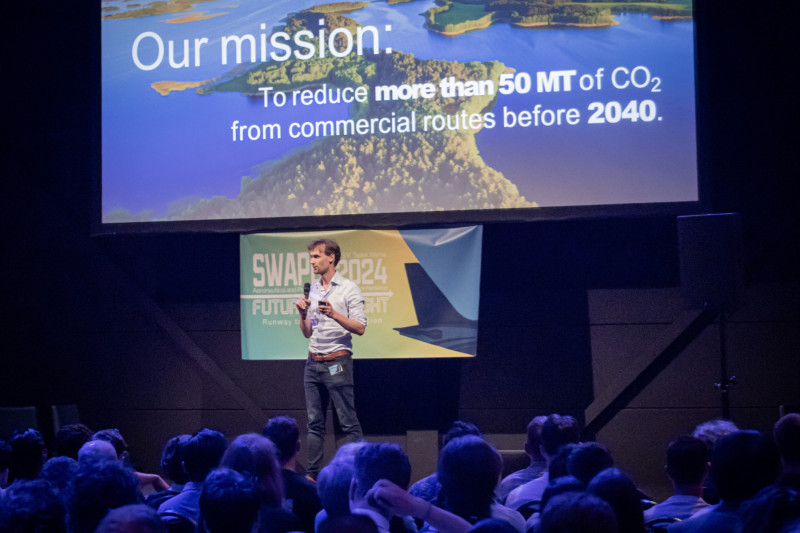
Next, senior Airbus strategist Guido Schwartz presented Airbus’s approach to sustainable aviation: “Decarbonizing flights requires groundbreaking solutions that integrate new fuel types and technologies. Besides international cooperation, societal acceptance is also crucial.” Arvind Gangoli Rao, professor of sustainable aircraft propulsion at TU Delft, discussed the impact of new fuels and propulsion designs on emission reduction and aircraft designs, while Denise Eikelenboom from NLR (Netherlands Aerospace Centre) addressed the challenges around certifying new technologies. “It takes courage, perseverance, and especially time to meet all safety standards and develop new ones,” she stated.
Second-Year Project Award Ceremony
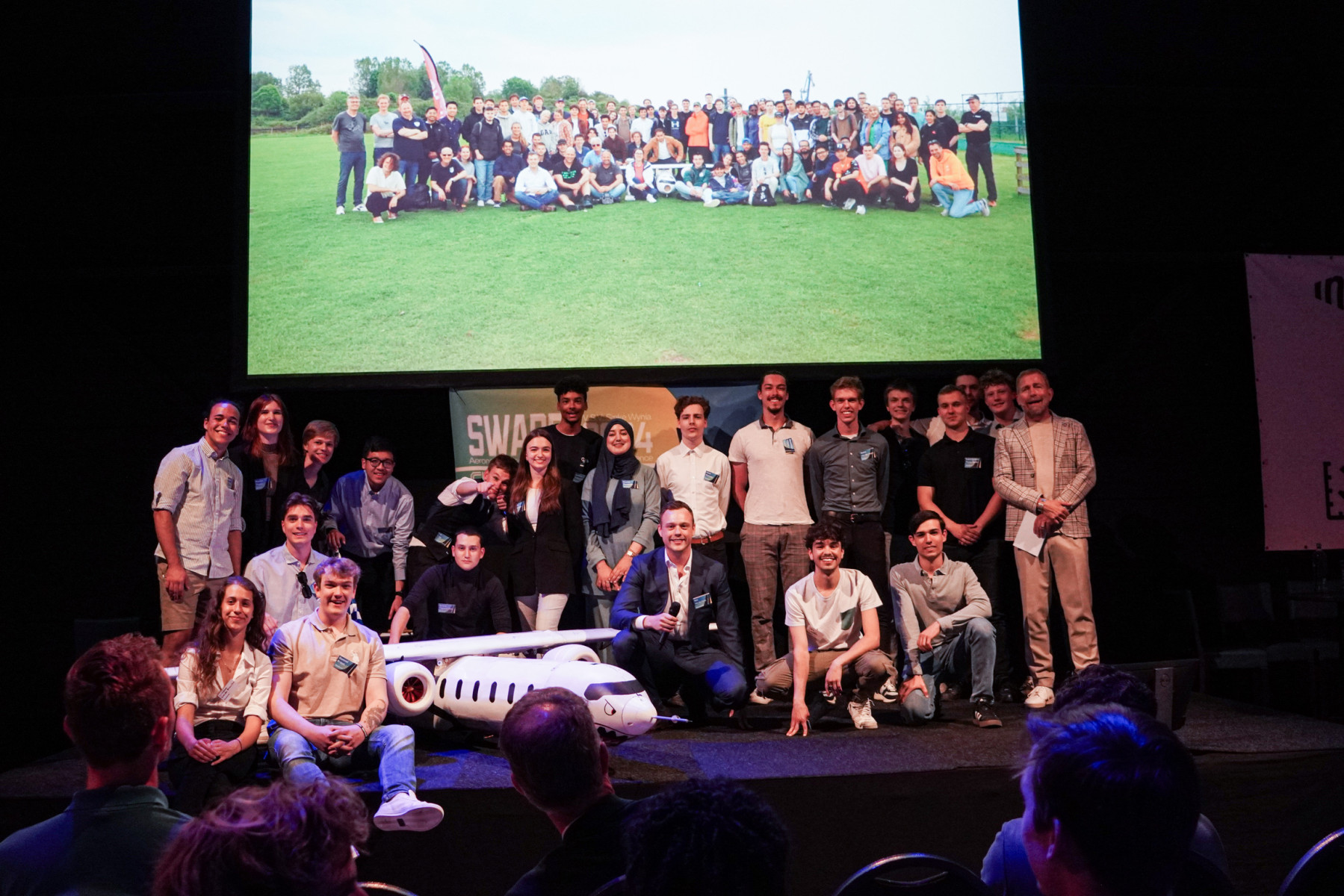
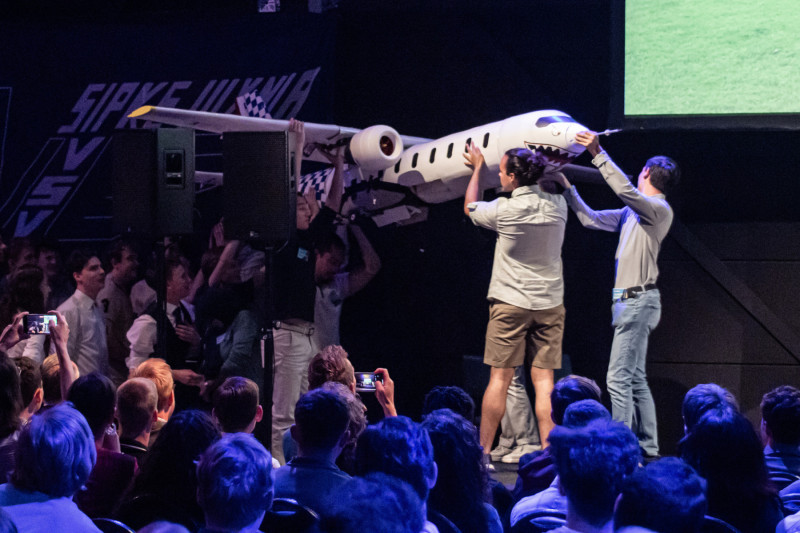
After the lunch break, the award ceremony for second-year Aeronautical Engineering students took place. Their assignment? Design, build, test and fly a remote-controlled electric scale model airplane for extinguishing small fires. The four prototypes, which made their first flights the day before, were on display. “A hugely educational project,” said lecturer Rick van de Ploeg. “These students overcame technical challenges and learned to communicate and collaborate effectively.”
New Initiatives
The afternoon highlighted various new initiatives. Ron van Baaren, CTO of Fokker Next Gen, represented the hydrogen movement, where the major challenge lies in convincing both technicians and investors of a kerosene-free future. Erik Geertsema, CEO of Conscious Aerospace, and Joseph Michaels presented strategies to accelerate the introduction of hydrogen-electric propulsion systems through retrofit solutions. And Hubert Blijie spoke about the AeroDelft project, in which mainly students from TU Delft and Inholland design, build, and test a liquid-hydrogen-electric two-seater aircraft.
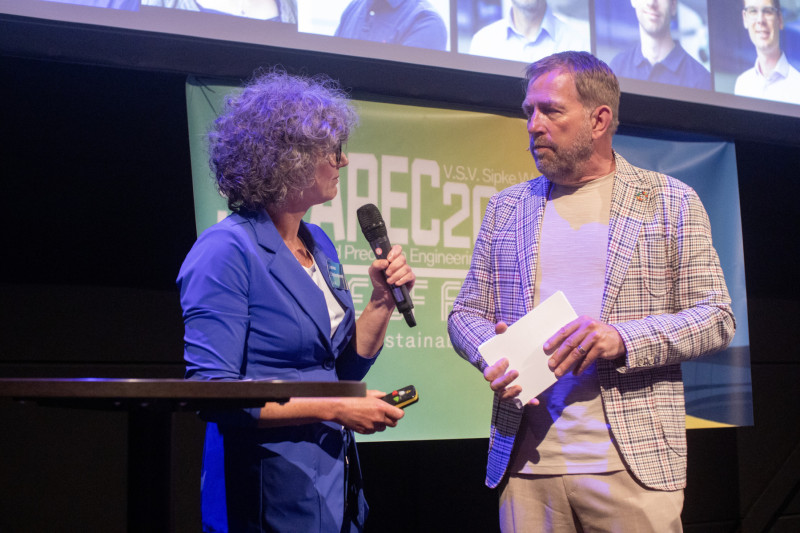
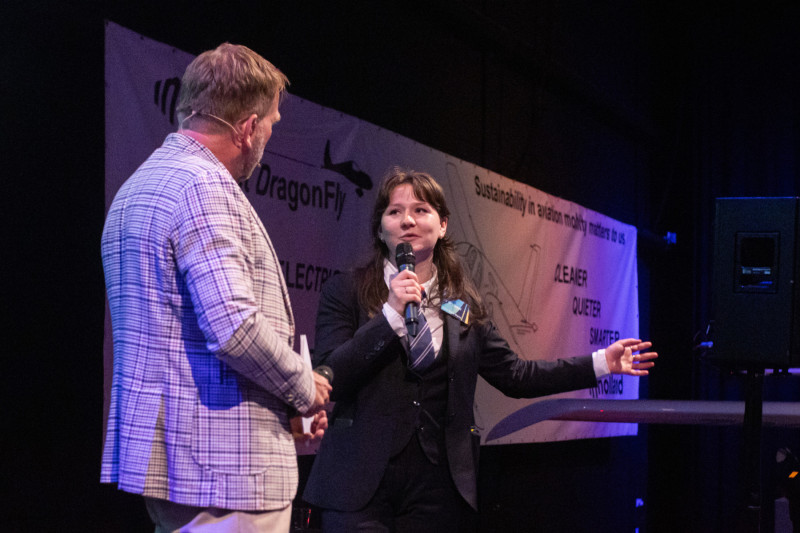
Then the electric movement was spotlighted, with designs such as the Maeve M80, a hybrid-electric aircraft for 84 passengers from Maeve Aerospace, and the Microliner from Vaeridion, with battery engines in the wings. Finally, Joaquin Exalto, Aircraft Performance Engineer at Elysian Aircraft, explained the possibilities of battery technology for electric flights. A potentially shorter range is less relevant, according to him: "80% of all turboprop flights in Europe are less than five hundred kilometers."
Young & Disruptive
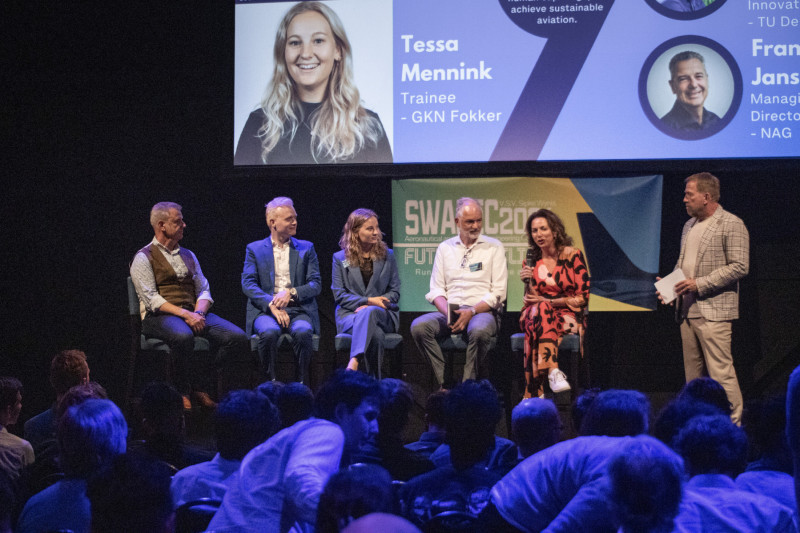
The conference concluded with a panel discussion on the shortage of human capital in sustainable aviation. Young professionals Tessa Mennink (GKN Fokker) and Sjoerd Luijckx (TANIQ) spoke with industry experts Jolanda Stevens (KLM), Frank Jansen (NAG), and Victor Rijkaart (TU Delft). The urgency was clear: within ten years, 50% of the sector will retire. To prevent losing young talent to other sectors, established companies must become more attractive and respond to the needs of the new generation. Sjoerd: “Ensure ownership and give newcomers the chance to make an immediate impact.” Tessa also wants more commitment, as 2050 seems far off: “For that, we need new leadership and structures where talent can grow.” The advice: be transparent about sustainability performance, expand collaboration, and also involve suppliers and the energy sector.
Highly Successful
The unique mix of speakers and the impressive turnout of industry leaders were, according to Inholland program manager Arnold Koetje, crucial to the great success of the symposium. “The panel discussion could have been a bit sharper, but the young professionals did an excellent job! This, combined with Harm Edens’ knowledge of sustainable developments worldwide, interspersed with a humorous note, made SWAPEC 2024 a very successful edition.”