

Students experience innovative VR collaboration with the Co-Design Canvas
Students from the Creative Business program have completed their work sessions in a virtual Co-Design Canvas environment, together with Australian students. These sessions were part of a research project exploring how co-design in virtual reality (VR) can enhance empathy and connection through immersion and embodiment. The research, which ran from February to April 2025, were a collaboration between Inholland University of Applied Sciences and Queensland University of Technology (QUT), supported by a grant from the Dutch VIS program.
First experiences in the virtual space
During the initial VR onboarding session, students from Inholland and QUT met in small international teams for an interactive introduction. They used immersive VR technology—a virtual environment that, through VR headsets, makes users feel truly present and together in a shared digital space. In the second session, they worked on learning assignments from the Creative Business program in The Hague, using two key methods:
- The Co-Design Canvas, developed by Wina Smeenk, Professor of Societal Impact Design at Inholland.
- Playing personas, a method that helps bring target audiences to life through role-play, as described in the Co-Design book by Jeremy Kerr, Associate Professor of Visual Communication at QUT's School of Design.
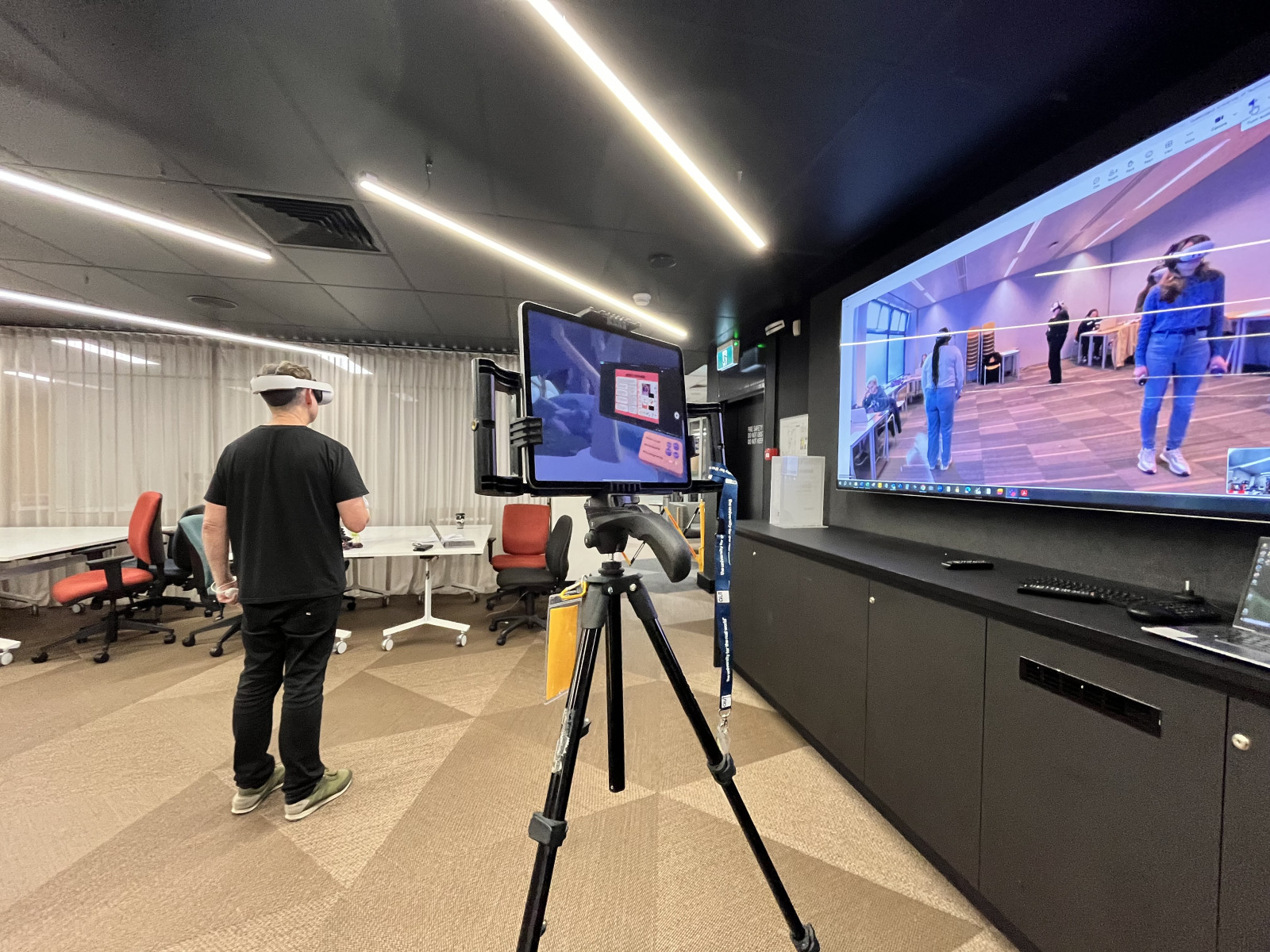
Australian students used avatars and the playing personas method to reflect on various concepts developed by Inholland students. This enabled them to provide constructive, embodied feedback to improve the concepts and prototypes. Simultaneously, the research explores how co-design in VR can foster empathy and connection through immersive and embodied experiences.
Jeremy Kerr: “We are exploring how co-design can take place in new ways using the latest technology. Rather than relying solely on Zoom, Teams, and virtual whiteboards to collaborate across borders, we’re looking at embodied co-design in specially designed virtual spaces. This is a whole new way to experience creative collaboration.”
This immersive form of co-design offers students a unique learning experience. They develop not only technical and content-specific skills but also learn to collaborate with people from around the world.

How dit the project begin?
The project emerged from a partnership between Inholland, QUT, and the EdTech-team, enabled by a VIS grant awarded after a successful pilot in July 2024. The project has since been further developed and is now being tested in practice with students.
Joining forces
Henk Kruizinga, audiovisual and ICT process coordinator at Inholland and member of the EdTech community, initiated the Co-Design Canvas in VR. “In 2023, I attended a workshop on the Co-Design Canvas by Wina Smeenk. We were intrigued by each other's expertise and promised to stay in touch for possible collaboration.”
From EdTech, he explores the use of VR applications in Inholland’s education. “I discovered Naer, an app for virtual collaboration, and saw potential for the Co-Design Canvas. In one of the app’s environments, I placed a whiteboard with editable sections of the Co-Design Canvas. I invited Wina to test the proof of concept, and she immediately involved her contact in Australia.”
The first test had its challenges, but there was plenty of enthusiasm. Wina and Claudia saw the potential, which encouraged Henk to further refine the concept. “Through learning and experimenting, we quickly arrived at a workable virtual collaboration environment,” Henk continues. “Now that we are applying it in classes, we keep seeing more potential. Each of us keeps coming up with new additions and ideas for the next version—we’re eager to keep evolving it.”
For many students, this is their first time collaborating in a VR environment. They gain firsthand experience of working in virtual teams, developing cross-cultural communication skills, digital literacy, and in-depth knowledge of co-design methods.
Project leader Claudia Mayer, lecturer Creative Business and researcher at Societal Impact Design within the ARC Research Center, emphasizes: “This immersive form of co-design offers students a unique learning experience. They develop not only technical and content-specific skills but also learn to collaborate with people from around the world.”
Next Steps
Now that the VR sessions are complete, a feedback session was held to exchange experiences and perspectives. The group will also co-author an article about this innovative approach to education and collaboration. Early feedback has been overwhelmingly positive.
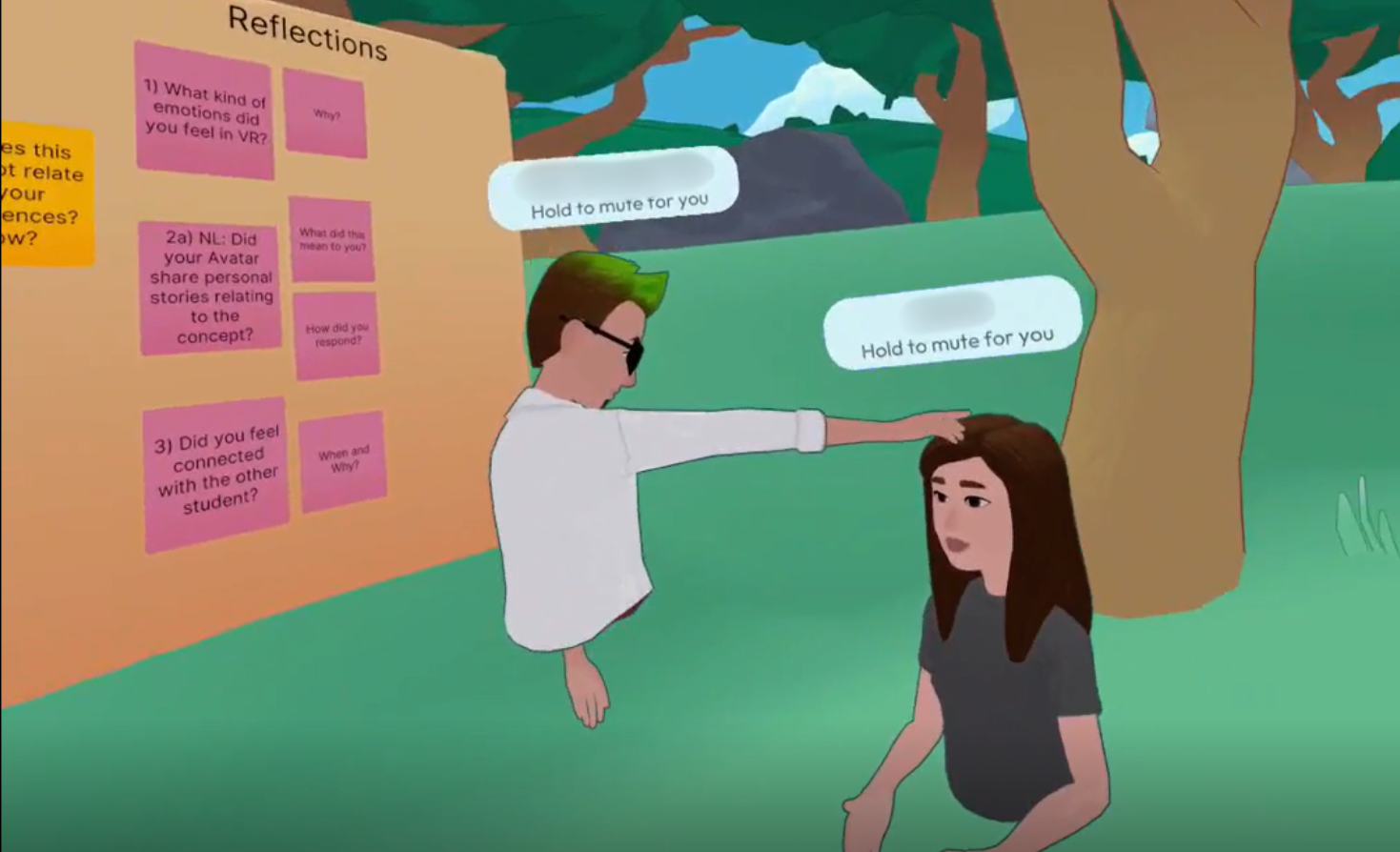
Wina Smeenk, Professor of Societal Impact Design, concludes: “Through this research, we’re gaining valuable insights into how VR experiences can support cross-border co-design. We saw that students truly felt like they were working together. In their gestures, we observed early signs of empathy—for example, when an Australian avatar of a 12-year-old girl was comforted with a gentle pat on the head by a Dutch student. We’re also learning more about integrating VR technology into education and research.”