

“We have to treat AI as a creative instrument for human expression”
New PD candidate Jacco Gardner explores the role of AI in creative expression
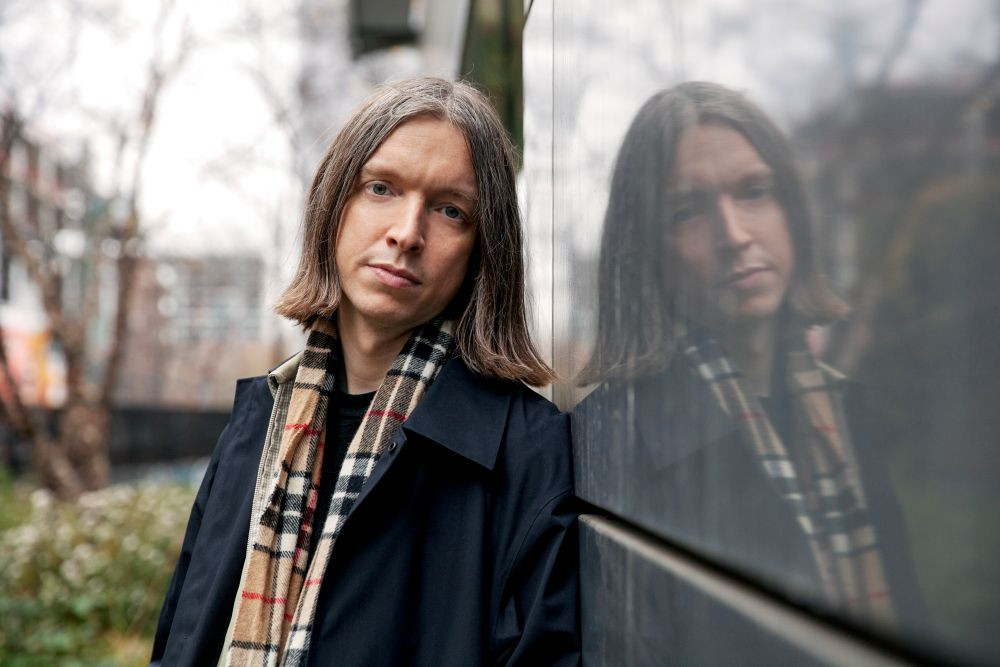
The advent of generative AI is turning the creative industry upside-down. Are ChatGPT and other generative AIs with so-called large language models about to render creative professionals surplus to requirements? Artist-researcher Jacco Gardner prefers to see things differently. At the beginning 2026, he will kick off a professional doctorate (PD) at Inholland to investigate how collaboration with AI can create new forms of audio-visual expression. And, the way he sees it, it’ll be in much the same way that we got to grips with early computers in the 1980s and 1990s. “We can learn a great deal from the pioneers back then, in combination with the protocols from the current digital revolution.”
Read Dutch article here
Early on in his career, Jacco was mainly known as a musician, composer, and producer. Then, from being a multi-instrumentalist with a penchant for psychedelic music, he gravitated towards a retro-futuristic synthesiser sound. Unfortunately, gigs inside and outside the Netherlands left him little room for research. “I’ve always considered research to be important,” he insists. “In 2012, I actually graduated from the Utrecht School of the Arts with a thematic study of the distinctive sound generated by the unique limiter, an historical musical instrument built by Phonogram engineer Jan Audier and dating back to the ‘60s and ‘70s.”
If we leave it all to algorithms that we don’t understand, we’ll be sacrificing our autonomy as creative professionals.

Live performances
In the meantime, Jacco has reached the stage where he can combine research and performance. “I can now bring studio experiments onto the stage and collaborate with electronics as if they were musicians,” he continues. In the context of these audio-visual performances, he builds installations from machines, staying in live contact with them like a conductor would with an orchestra. A key role here is played by forgotten intelligent sequencers, which are devices that make their own compositional choices. “It’s as if you are improvising with musicians; there’s real-time interaction between me and the equipment.”
Man and machine
The rising popularity of the sequencer coincided with that of digital electronic music in the 1980s, he explains. “It was a fascinating time. Protocols were developed that enabled the mutual exchange of musical information between electronic musical instruments. What makes this digital revolution so exciting is the collaboration between people and machines. The 1980s machines were seen as accomplices, as it were, and thus extensions of your creativity, exhibiting complex, unpredictable behaviour, just as if they were human. And it’s that human behaviour that has so much in common with today’s AI.”
Will AI be able to stimulate human creativity by learning from the legacy of the digital revolution?
Collaborating with AI
Jacco has identified many commonalties between the digital revolution that took place 40 years ago and today’s generative AI. “What you see now, however, is that people are delegating too much to AI, which can be problematic. Instead, we need to learn to collaborate with technology, like those 1980s and 1990s pioneers did. We can learn a lot from them and the protocols of the current digital revolution. We have to treat AI as a creative instrument for human expression, but to do so we must first of all learn how to understand and interact with it. If we don’t, and leave it all to algorithms that we don’t really understand, we’ll be sacrificing our autonomy as creative professionals and making do with a homogeneous outcome.”
Triangular relationship
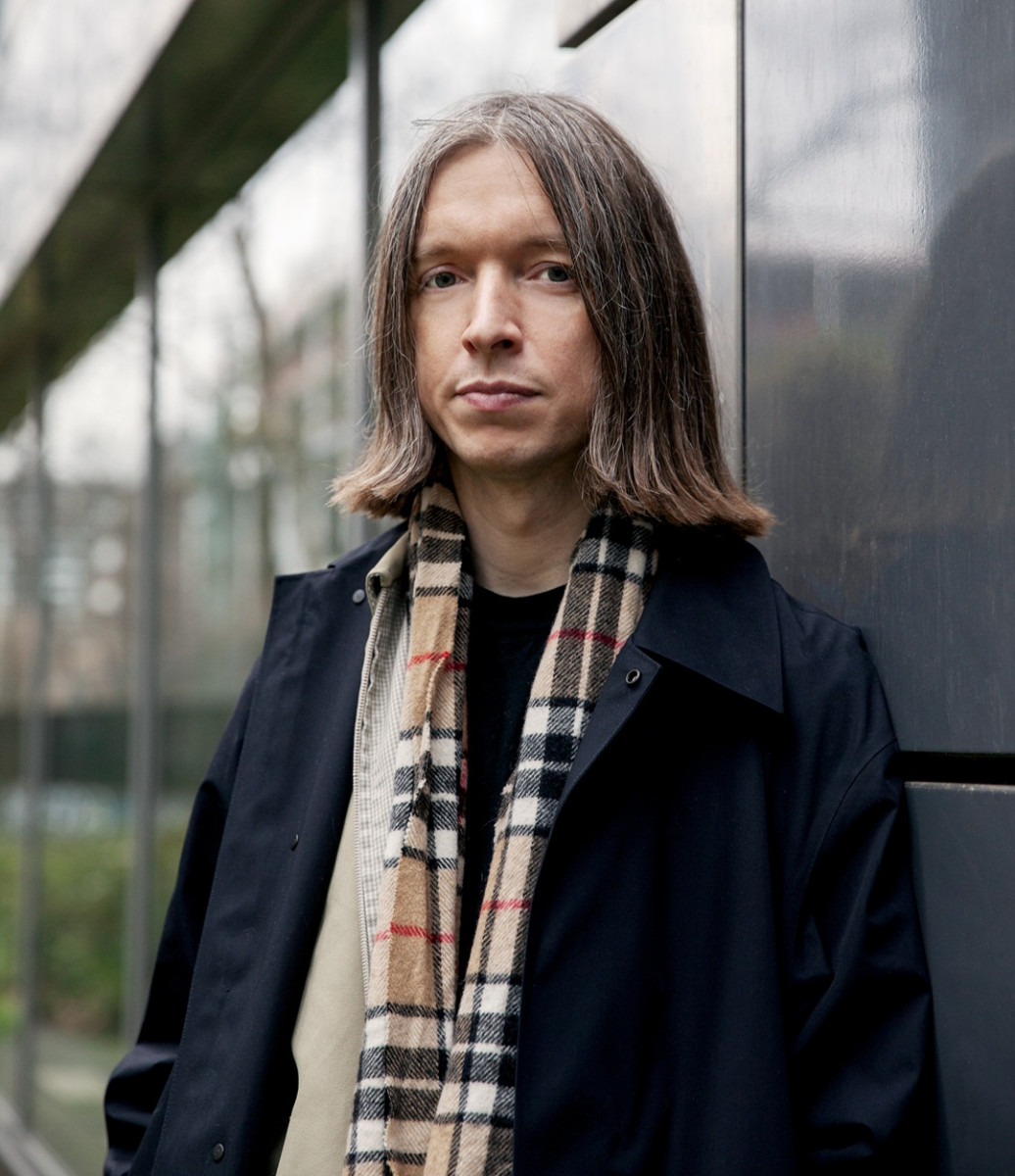
Jacco uses AI in his audio-visual performances. “On stage, a kind of triangular relationship exists between me, the AI model that I use, and the digital instruments. AI thus draws from our cultural past and stimulates our creativity with a language we understand. It’s an intriguing scenario for me that forms a central tenet of my PD research. In other words, how can AI reconcile the input of creative digital systems and creative professionals, while, in so doing, preserving collaborative intelligence and enabling new forms of audio-visual expression? Will AI thus be able to stimulate human creativity by learning from the legacy of the digital revolution?”
While the use of AI can no longer be circumvented, we need to ask ourselves how we can best use it and the conscious choices we need to make when doing so.
Pioneers
In his PD, Jacco wants to help (aspiring) creative professionals, such as students, use AI to boost their creativity. “I think it’s important to share the legacy of the 1980s digital revolution with them and connect them with the pioneers of that era. Perhaps show today’s creators how we can make the protocols and technology of that era accessible to them, so that they can build on them. I’d like to see those pioneers get the recognition they deserve and connect today’s creators with them through symposia.”
Innovation in the Music Industry
Jacco’s PD will take five years, under the supervision of Koos Zwaan, professor of Innovation in the Music Industry. “Jacco’s project is a perfect fit with the research agenda of my research group,” assures Koos. “In his research, Jacco’s main focus is on the interaction between technological and creative innovation, exploring aspects such as the role new technology plays in musicians’ production processes and presentation formats. But social innovation also plays a significant role in Jacco’s research, because it involves the preservation of our digital heritage and, in a broader sense, questions the societal role played by technology. And while the use of AI can no longer be circumvented, we need to ask ourselves how we can best use it? As well as the conscious choices we need to make when doing so.”
Inholland is strengthening the links between education, research, and professional practice. Professional doctorates (PD) - a new form of practically oriented doctoral research that can be followed after obtaining a master’s degree from a university of applied sciences (HBO) - are fuelling this process. By investing in PD candidates, we are extending both the breadth and depth of our research. This will ensure that our students are even better informed about the latest developments in professional practice, and improve the alignment of our research and education with the needs of the labour market. All of which is fully in line with Inholland’s mission.
Inholland is participating in several themes in a national pilot programme for professional doctorates. Use the search criteria “PD” on our website to discover what our candidates are currently working on.